
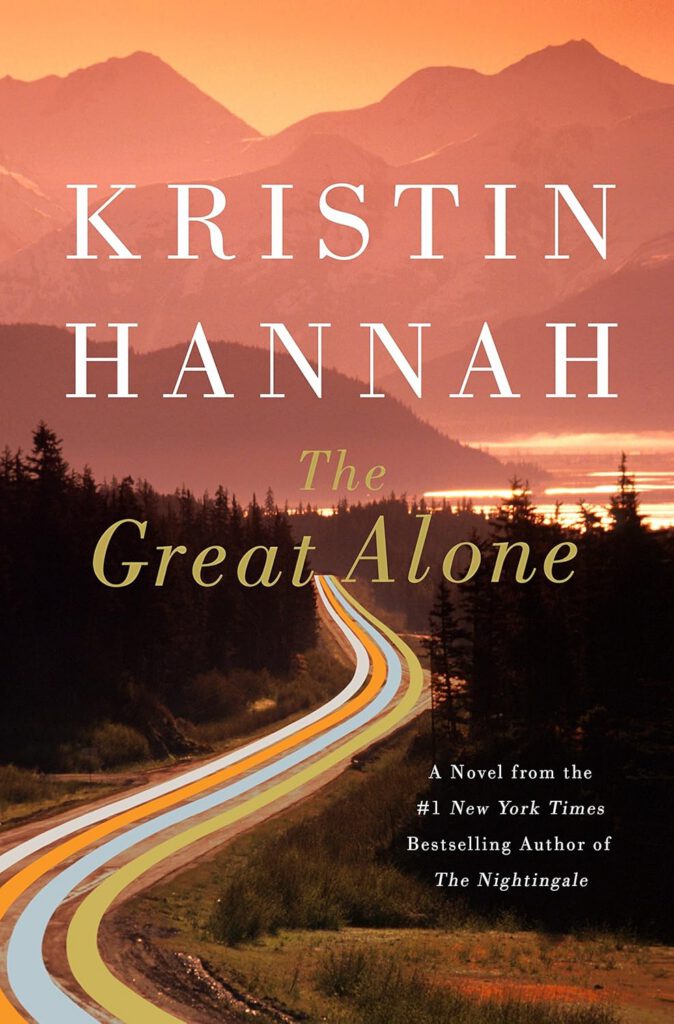
The Great Alone
Also available on: Kindle, Audible
Synopsis
“The Great Alone” (2018) by Kristin Hannah is a harrowing, atmospheric survival story set in the unforgiving wilderness of Alaska in the 1970s. It explores the duality of nature—both its breathtaking beauty and its lethal cruelty—while mirroring that volatility in the character of a damaged father.
The Plot: A Final Frontier
The story follows thirteen-year-old Leni Allbright. Her father, Ernt, is a former POW who returned from the Vietnam War a changed man—volatile, paranoid, and prone to “dark nights.” When he inherits a cabin in the remote Kenai Peninsula, he convinces his wife, Cora, and Leni that moving to Alaska is the fresh start they need to outrun his demons.
-
The Reality of Alaska: The Allbrights arrive completely unprepared for the reality of “off-the-grid” living. They are saved by the local community—a hardened group of pioneers who teach them how to hunt, garden, and preserve food before the “Great Alone” (the winter) sets in.
-
The Domestic Storm: As the Alaskan winter approaches and the sun disappears for months, Ernt’s mental state deteriorates. The isolation feeds his paranoia, and the cabin becomes a pressure cooker of domestic violence. Leni and Cora find themselves trapped between the danger outside (bears, sub-zero temperatures, starvation) and the danger inside.
Key Themes: Love and Survival
1. The “Toxic” Bond
A central theme is the intense, destructive love between Cora and Ernt. Despite his violence, Cora remains fiercely loyal, creating a “us against the world” mentality that keeps Leni in a state of constant hyper-vigilance. The book examines the cycle of abuse and the difficulty of leaving when survival depends on the abuser.
2. Coming of Age in the Wild
Leni’s transformation from a frightened child to a resilient survivor is the heart of the novel. Her relationship with Matthew Walker, the son of a neighboring family, provides a glimpse of a different kind of love—one based on partnership and mutual respect—which stands in stark contrast to her parents’ marriage.
3. Alaska as an Antagonist
In Hannah’s writing, the landscape is a character. She emphasizes that “Alaska doesn’t give a damn if you live or die.” The transition from the “Big Bright” (summer) to the “Great Alone” (winter) dictates the emotional rhythm of the book, as the darkness brings out the worst in the characters.
Why It’s a 2026 Essential
In 2026, The Great Alone remains a powerhouse of emotional storytelling.
-
Historical Immersion: The 1970s setting—marked by the end of the Vietnam War and the rise of survivalist culture—provides a unique backdrop for a story about PTSD and trauma.
-
Resilience: It is a tribute to the “pioneer spirit” of women. Like Hannah’s other works, it highlights the invisible strength required to survive in environments designed to break you.