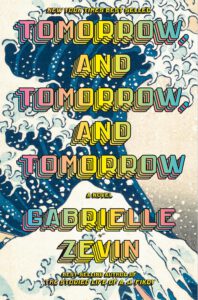
by Gabrielle Zevin
14 discussion topics
2022
⭐ 4.24
“Tomorrow, and Tomorrow, and Tomorrow” (2022) by Gabrielle Zevin is a sweeping, multi-decade novel about the beauty, complexity, and heartbreak...
“Tomorrow, and Tomorrow, and Tomorrow” (2022) by Gabrielle Zevin is a sweeping, multi-decade novel about the beauty, complexity, and heartbreak of creative partnership. While it is set in the world of video game design, it is fundamentally a story about the different kinds of love—platonic, professional, and romantic—and how we “play” through the tragedies of life.
The Plot: A Lifelong “New Game Plus”
The story follows two friends, Sam Masur and Sadie Green, who meet as children in a hospital game room. Their bond is forged over a shared love of Super Mario Bros. and a mutual feeling of being outsiders.
The Reunion: Years later, they run into each other in a crowded Harvard Square subway station. This chance encounter leads to the creation of their first blockbuster game, Ichigo, and the founding of their company, Unfair Games.
The Third Pillar: Joining them is Marx Watanabe, Sam’s wealthy and charismatic roommate, who becomes the producer and the “glue” that holds Sam and Sadie together.
The Conflict: As they become superstars in the gaming industry, their relationship is tested by creative ego, professional jealousy, and the lingering traumas of their pasts.
Key Themes: Games as Art and Escape
1. The Meaning of the Title
The title is a famous line from Macbeth’s soliloquy, but in this book, it takes on a different meaning. In a video game, “Tomorrow, and Tomorrow, and Tomorrow” represents the possibility of infinite rebirth. If you die, you can press “Restart.” You can always try again. This stands in stark contrast to the permanence of loss in the real world.
2. Creative Intimacy
Zevin explores the idea that building something with someone is a form of intimacy that can be deeper—and more volatile—than sex. Sam and Sadie often fail to communicate in real life, but they “speak” to each other through the mechanics and stories of the games they build.
3. Games as Emotional Architecture
The book describes several fictional games that reflect the characters’ mental states:
Ichigo: Inspired by Hokusai’s The Great Wave, representing a child lost at sea.
EmilyBlaster: A game based on Emily Dickinson’s poetry, representing Sadie’s grief and isolation.
Mapletown: A virtual world where Sam can escape his chronic physical pain.
Why It’s a 2026 Modern Classic
In 2026, the novel is praised for its “literary world-building.” Even readers who have never played a video game find themselves moved by the story because:
Disability Representation: Sam lives with a severe, chronic foot injury. Zevin’s depiction of how physical pain shapes a person’s personality and choices is incredibly nuanced.
The “Marx” Factor: Marx Watanabe is often cited by readers as one of the most beloved “selfless” characters in modern fiction, and his arc provides the book’s most emotional turning point.
The 90s/00s Nostalgia: For those who grew up during the transition from 8-bit to 3D graphics, the book is a love letter to the history of the medium.