
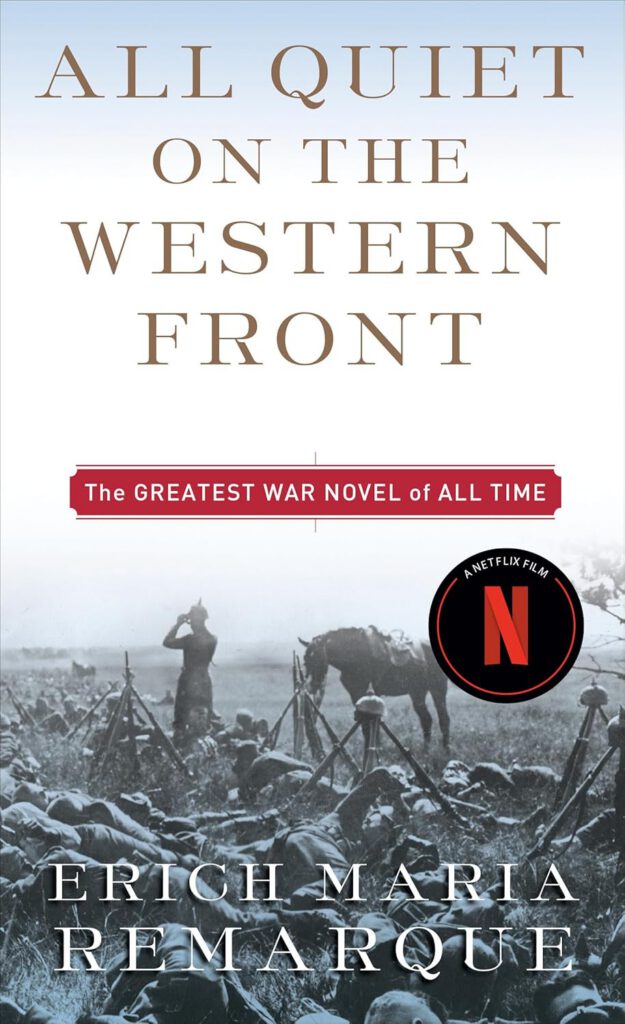
All Quiet on the Western Front
Also available on: Kindle, Audible
Synopsis
“All Quiet on the Western Front” (1929) by Erich Maria Remarque is arguably the greatest anti-war novel ever written. Based on Remarque’s own experiences in the German army, it stripped the “glory” from World War I and replaced it with a haunting look at the physical and psychological destruction of a “Lost Generation.”
The Plot: From Classroom to Trenches
The story follows Paul Bäumer, a young German student who, along with his classmates, is pressured into enlisting by their patriotic schoolmaster, Kantorek. They head to the front lines full of romanticized ideals of heroism, only to have those illusions shattered instantly by the reality of industrial warfare.
-
The Mentor: Paul is taken under the wing of Stanislaus Katczinsky (Kat), an older, resourceful soldier who teaches the boys how to survive, find food, and endure the mental strain of the front.
-
The Attrition: One by one, Paul’s friends are killed or maimed. The “plot” isn’t a hero’s journey, but a slow, rhythmic cycle of resting behind the lines and returning to the “meat grinder” of the trenches.
The Reality of the “Great War”
Remarque focuses on the sensory horrors that history books often sanitize:
-
The Trench Warfare: The constant threat of gas attacks, the sound of “death-rattles,” and the sight of horses screaming in pain.
-
Dehumanization: To survive, the soldiers must turn off their emotions. They become “human animals,” operating on instinct rather than morality or ideology.
-
The “Enemy”: In a pivotal scene, Paul hides in a shell-hole and kills a French soldier. Spending hours with the dying man, he realizes they are identical—men with families and lives who have no personal reason to kill one another.
Key Themes: The Lost Generation
-
Betrayal by Elders: Paul and his friends feel a deep resentment toward the older generation (teachers, parents, politicians) who sent them to war while remaining safe at home.
-
The Alienation of Home: When Paul goes on leave, he finds he can no longer speak to his family. Their “civilian” view of the war is so disconnected from the truth that he feels more at home in the mud of the trenches than in his own bedroom.
-
The Meaning of the Title: The book ends with Paul’s death on a day so peaceful that the official army report simply states: “All quiet on the Western Front.” It highlights the utter insignificance of an individual life in the face of the war machine.
Why It’s a 2026 Essential
With the 2022 Netflix adaptation winning multiple Oscars, the book has seen a massive resurgence in the mid-2020s.
-
Modern Relevance: Its message about the gap between political rhetoric and the reality of the soldier remains a universal warning.
-
The “Anti-War” Blueprint: It set the standard for how we tell war stories today—focusing on the foot soldier’s perspective rather than the generals’.