
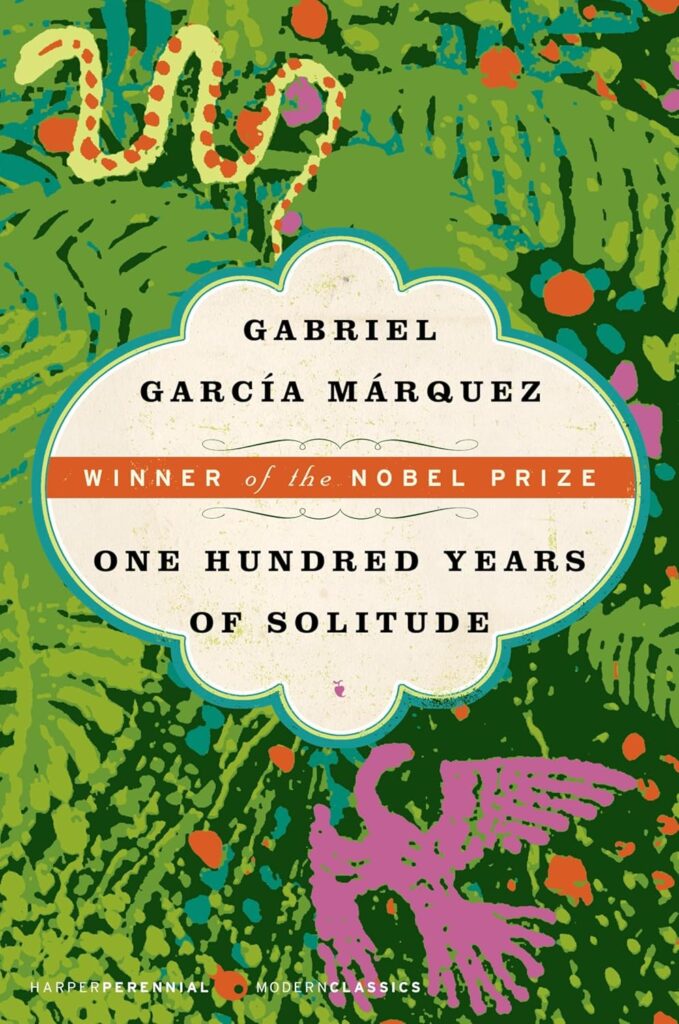
One Hundred Years of Solitude
Also available on: Kindle, Audible
Synopsis
One Hundred Years of Solitude (Cien años de soledad) by Gabriel García Márquez (1967) is the definitive masterpiece of Magical Realism. It chronicles seven generations of the Buendía family in the fictional, isolated town of Macondo, Colombia.
The Story of Macondo
The novel begins with the patriarch, José Arcadio Buendía, founding Macondo—a “village of twenty adobe houses” where the world was so new that many things lacked names. The town evolves from an idyllic, magical settlement into a place ravaged by civil war, industrial exploitation (the “Banana Massacre”), and ultimately, a biblical hurricane that erases it from the map.
The narrative is famous for its cyclical nature. Characters often share the same names (José Arcadio and Aureliano) and repeat the same mistakes, trapped in a loop of pride, passion, and profound solitude.
Key Themes: The Heart of the Novel
- Magical Realism: Supernatural events are treated as mundane. A woman ascends to heaven while hanging laundry; a trail of blood flows across town to find a mother; a priest levitates after drinking chocolate.
- Solitude: Every Buendía is deeply solitary, unable to truly connect with others. Their isolation is both a personal choice and a generational curse.
- The Subjectivity of Time: Time in Macondo is not linear. History repeats itself until the family is finally “wiped out” because “races condemned to one hundred years of solitude did not have a second opportunity on earth.”
- Political Allegory: The story mirrors the history of Latin America—colonialism, the fight between Liberals and Conservatives, and the destructive impact of foreign imperialism.
Why It’s Trending in 2026
- Netflix Series Adaptation: After decades of the García Márquez estate refusing film rights, a massive Netflix series premiered recently. It has introduced the “unfilmable” story to a new generation, with high praise for its visual depiction of Macondo.
- Climate Fiction (Cli-Fi) Links: Modern readers are rediscovering the book’s “five years of rain” and the final “apocalyptic wind” as a prescient metaphor for environmental collapse.
- The “Gabo” Legacy: In 2024, a “lost” novel by García Márquez, Until August, was published, sparking a massive resurgence in his entire catalog.