
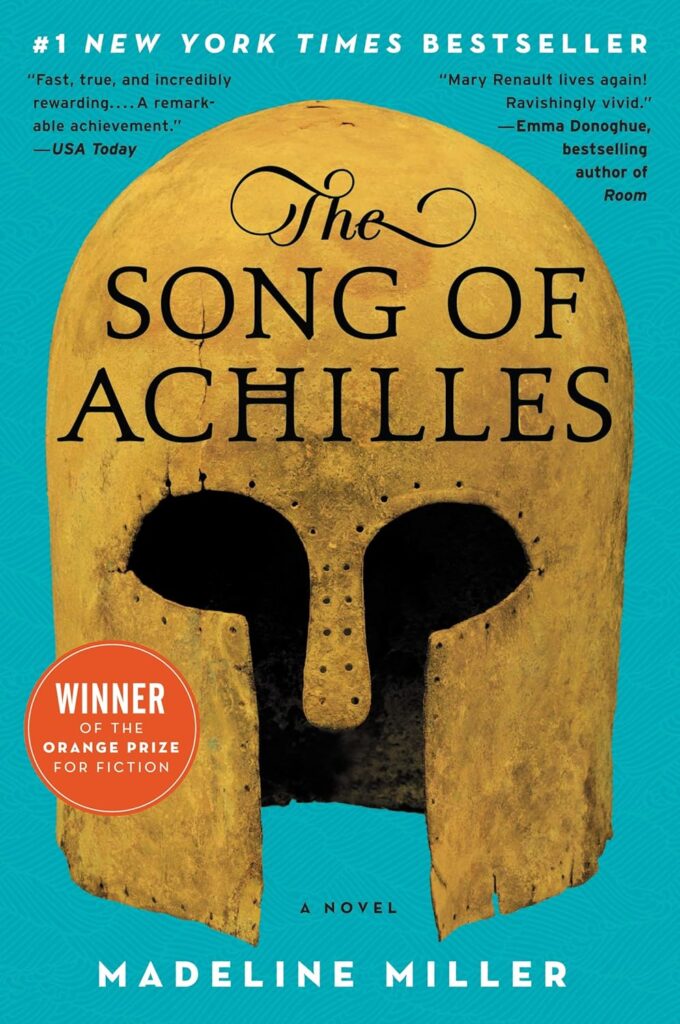
The Song of Achilles
Also available on: Kindle, Audible
Synopsis
“The Song of Achilles” by Madeline Miller (2011) is a lyrical, heartbreaking reimagining of the Trojan War. While the Iliad focuses on “Achilles’ rage,” Miller shifts the lens to the perspective of Patroclus, transforming a bloody epic into one of the most celebrated love stories of the modern era.
The Plot: From Exile to Legend
The story follows Patroclus, a clumsy, “disappointing” young prince who is exiled to the court of King Peleus. There, he meets the “Golden Boy” Achilles—the son of the king and the sea-nymph Thetis.
-
The Bond: Despite their differences, the two become inseparable. Their childhood friendship blossoms into a deep, romantic bond, even as Achilles is prophesied to become the “Greatest of all Greeks.”
-
The Prophecy: When Helen of Sparta is kidnapped, Achilles is called to war. Thetis, his mother, tries to hide him, but destiny (and Odysseus) prevails. Patroclus follows Achilles to Troy, not as a warrior, but as his “other half.”
-
The Tragedy: The novel follows the ten-year siege of Troy, culminating in the famous rift between Achilles and Agamemnon, Patroclus’s fatal decision to don Achilles’ armor, and the devastating grief that follows.
Key Themes: Fame vs. Happiness
-
The “Best of the Greeks”: Achilles is haunted by a choice: a long, quiet life of obscurity, or a short, glorious life that ensures his name lives forever. Miller explores the heavy price of that “glory.”
-
The Humanity of Heroes: Miller strips away the marble-statue perfection of Greek myths. We see Achilles as a boy who plays the lyre and a man who is prideful and petty, while Patroclus is the moral anchor of the story.
-
Fate and Divine Interference: Thetis serves as the primary antagonist—a cold, immortal goddess who despises Patroclus for his mortality and for “distracting” her son from his divine destiny.
Why It’s a 2026 Cultural Icon
-
The “BookTok” Legend: Along with A Little Life, this is the book most famous for “making people cry on camera.” Its ending is notorious for its emotional impact, even for those who already know the Greek myths.
-
Queer Reclaimed History: Miller’s portrayal of Achilles and Patroclus as lovers (rather than just “cousins” or “companions”) drew from ancient interpretations and helped a new generation see themselves in classical literature.
-
Prose as Poetry: Miller, a classical scholar, spent ten years writing the book. Her prose is often described as “shimmering” and “dreamlike,” making the brutal setting of a bronze-age war feel hauntingly beautiful.