14 discussion topics
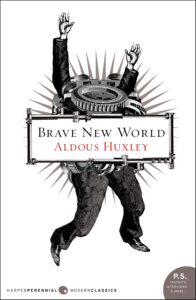
Brave New World” by Aldous Huxley (1932) is one of the most prophetic and influential dystopian novels of the 20th...
Brave New World” by Aldous Huxley (1932) is one of the most prophetic and influential dystopian novels of the 20th century. While George Orwell’s 1984 warns of a world controlled by fear and pain, Huxley warns of a world controlled by pleasure, consumerism, and genetic engineering.
The World State: “Community, Identity, Stability”
Set in London in the year AF 632 (After Ford, referencing Henry Ford’s assembly line), the world is a technologically advanced “utopia.” There is no war, poverty, or disease. However, this has come at the cost of family, art, religion, and philosophy.
1. Predestination and the Caste System
Citizens are no longer born; they are decanted in “Hatcheries.” Through a process called the Bokanovsky Process, embryos are conditioned to belong to a specific social class, with their physical and mental abilities tailored to their future jobs.
Alphas & Betas: The intellectual elite and technicians.
Gammas, Deltas, & Epsilons: Increasingly brain-damaged and stunted workers designed for repetitive manual labor.
2. Soma: The “Perfect” Drug
To maintain order, the State provides Soma, a hallucinogen that provides “all the advantages of Christianity and alcohol; none of their defects.” If anyone feels a hint of sadness or “unstable” emotion, they take a dose of Soma to return to a state of hollow bliss.
The Plot: The Arrival of “The Savage”
The story follows Bernard Marx, an Alpha who feels like an outsider because of a suspected physical defect during his decanting. He travels to a “Savage Reservation” in New Mexico—a place where people still live naturally.
There, he finds John “the Savage,” the son of a World State woman who was left behind years ago. Bernard brings John back to London as a social experiment. John, who grew up reading Shakespeare, is horrified by the soulless, hyper-sexualized, and drugged-out society of the World State. His eventual confrontation with the World Controller, Mustapha Mond, serves as the philosophical climax of the book.
Key Themes
The Price of Happiness: Huxley asks: Is life worth living if you are “happy” but have no freedom, no suffering, and no deep connection?
Science as a Tool of Control: The novel explores how biology and psychology can be used to enslave people more effectively than any weapon.
Consumerism: The society’s motto is “Ending is better than mending.” Citizens are conditioned from birth to discard old items and constantly buy new ones to keep the economy running.
Why It’s More Relevant in 2026
In an era of genetic CRISPR technology, algorithm-driven social media feeds designed for “engagement” (dopamine hits), and the widespread use of antidepressants and anti-anxiety medications, many critics argue that Huxley’s vision was far more accurate than Orwell’s.