14 discussion topics
“The Goldfinch” (2013) by Donna Tartt is a sprawling, Pulitzer Prize-winning “Dickensian” epic. It is a story about how a...
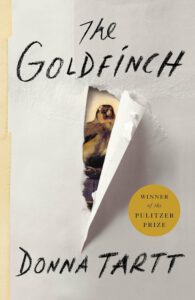
“The Goldfinch” (2013) by Donna Tartt is a sprawling, Pulitzer Prize-winning “Dickensian” epic. It is a story about how a single object—and a single moment of trauma—can tether a person to the past while simultaneously pulling them through a life of beauty, crime, and obsession.
The Catalyst: The Explosion
The novel opens with thirteen-year-old Theo Decker visiting the Metropolitan Museum of Art with his adored mother. A terrorist bomb goes off, killing his mother and changing Theo’s life forever. In the chaotic aftermath, a dying man urges Theo to take a small, priceless Dutch Golden Age painting: “The Goldfinch” by Carel Fabritius.
The Journey: From New York to Las Vegas to Amsterdam
The book is divided into distinct “chapters” of Theo’s life:
1. The Barbours (New York)
Orphaned and adrift, Theo is taken in by the wealthy, chilly Barbour family. Here, he discovers the world of antiques and meets Hobie, a gentle furniture restorer who becomes his mentor and moral compass.
2. The Desert (Las Vegas)
Theo’s deadbeat father resurfaces and whisks him away to a ghost-town suburb in Nevada. This is where Theo meets Boris, a chaotic, brilliant, and substance-abusing Russian transplant. Their friendship—defined by shared neglect and wild experimentation—is the emotional high point of the novel.
3. The Antique Shop (New York & Amsterdam)
As an adult, Theo returns to New York and enters into a business partnership with Hobie. However, his life is a house of cards: he is selling “doctored” antiques, and the painting he has hidden for years eventually leads him into a dangerous confrontation with international art thieves in Amsterdam.
Key Themes: Art and Fate
1. The Immortality of Art
The painting itself, painted in 1654, represents something that survives the “mess” of human life. Tartt explores the idea that while humans are temporary and flawed, the beauty we create is eternal.
2. The “Chain” of Obsession
Like the bird in the painting—which is chained to its perch—Theo is “chained” to the painting. It is both his salvation (the only thing left of his mother) and his prison (the secret that prevents him from ever truly being free).
3. The Middle Point
The novel is a meditation on the “middle point” between what we are born with and the choices we make. Theo is fundamentally a good person who does “bad” things, constantly grappling with the randomness of fate.
Why It’s a 2026 Classic
In 2026, The Goldfinch is remembered as one of the last great “maximalist” novels.
The Prose: Donna Tartt (who famously takes 10 years to write each book) produces prose that is incredibly dense and sensory. You can smell the wood varnish in Hobie’s shop and feel the dry heat of the Vegas desert.
The “Boris” Effect: Boris remains one of the most beloved sidekicks in modern literature—a “vivid, foul-mouthed Artful Dodger” who provides the book with its kinetic energy.